
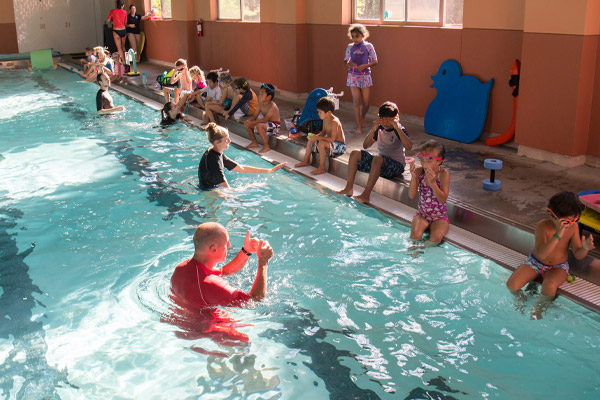
Parents often bring their kids to Nitro because they want them to be safe around water. They want the fundamental skills. They want peace of mind. What usually happens next is something bigger. Kids start trusting the water. They start trusting themselves. Safety turns into comfort. Comfort turns into confidence. That shift is where real progress begins.
Helping kids reach that point is one of the core parts of Nitro’s philosophy, whether they begin with swim lessons for babies, infant swim lessons, or later move into toddler swim lessons.
Many parents ask what the best age is to start swim lessons. The answer depends on the child, but early exposure to water in a calm, supportive environment helps children feel comfortable much sooner.
Why Swim Lessons for Babies, Infants, and Toddlers Start with Comfort
A confident swimmer does not appear out of nowhere. Comfort is the first step. Kids need time to understand what the water feels like. They need to explore without pressure. Nitro instructors use slow, steady routines. Bubble play. Supported floats. Simple movements that let kids feel in control.
This approach starts early. Many families begin with swim lessons for babies or infant swim lessons where the focus is not on strokes but on positive early experiences in the water.
Parents who first look for baby swim classes are often surprised to see how much early instruction centers on comfort, breath awareness, and playful interaction rather than formal swimming technique.
Parents notice the changes quickly. The stiff shoulders disappear. The tight breaths loosen. A child who once froze at the steps starts inching toward the instructor with curiosity.
Understanding the Water Through Predictable Patterns
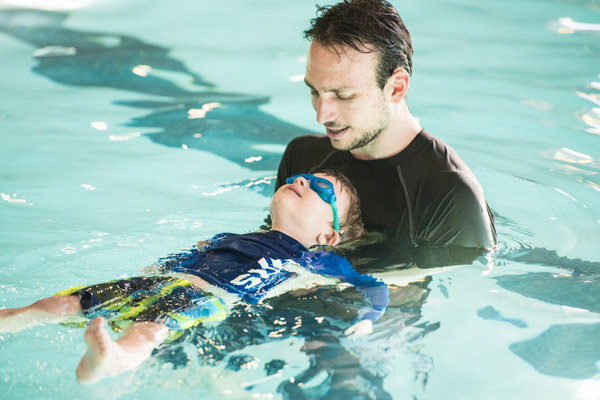
Kids thrive on predictability. When they know what comes next, they relax. Nitro’s swim lesson structure is built around repeatable patterns that help kids make sense of the water at their own pace.
These patterns show up early in toddler swim lessons and beginner swim levels where swimmers learn breath control, balance, and floating. None of these skills look dramatic from the pool deck, but they teach children how their bodies interact with the water.
Once that connection forms, the body relaxes and progress accelerates.
Consistency builds confidence faster than any single breakthrough moment.
Helping Kids Develop Trust with Their Swim Instructor
Comfort in the water grows faster when kids trust the person guiding them. Some swimmers need a calm voice. Others respond to playful encouragement. A few want space to try something independently. Nitro swim instructors read these cues and adjust in real time.
There is often a moment that signals the shift. A swimmer who once clung to the wall takes a couple of steps toward the instructor. A child who kept looking back at a parent begins focusing on the instructor’s voice instead.
These small changes are early signals that confidence is growing.
Turning Hesitation Into Exploration
Kids do not become confident by avoiding challenges. They become confident by discovering they can handle them.
Nitro instructors introduce new experiences through small, manageable progressions. A controlled submersion. A short glide. Floating just a moment longer. A swimmer might dip underwater half a second longer than expected and pop up smiling.
Another might glide a little farther before standing.
These small wins quietly add up. Each one teaches the child they can recover and try again.
Using Repetition to Give Kids Control
Repetition may look simple from the pool deck, but it gives kids something powerful. Control.
The more swimmers repeat foundational patterns, the more predictable the water becomes. They know how to float. They know how to return to the wall. They know how to breathe and reset.
These skills become anchors.
Once children trust those anchors, they start experimenting. They push off farther. They float longer. They explore the water instead of guarding against it.
Why Confidence Lasts Longer Than Any Single Skill
Technique evolves as kids grow, but comfort in the water tends to stay with them.
We see this in swimmers who started with infant swim lessons or early toddler swim lessons and continue progressing through higher levels. They may not remember the exact day they learned to float, but they remember when the water stopped feeling intimidating.
Confidence stays with them long after the lesson.
Takeaways for Swim Parents
- Look for small changes in comfort. These often come before skill breakthroughs.
- Confidence grows through quiet moments, not dramatic leaps.
- Predictable routines help children feel safe enough to explore.
- Your child’s pace is the right pace.
- Celebrate recoveries as much as new skills.
Nitro teaches water safety because it protects children. We teach water confidence because it changes how kids experience the water. A confident swimmer learns faster, stays calmer, and enjoys the pool more.
Over time, that confidence becomes the foundation for everything they do in the water.
Swim Lessons for Babies, Toddlers, and School-Age Kids in the Greater Austin Area
Nitro Swimming offers swim lessons designed for children at every stage of development. Many families begin with swim lessons for babies or infant swim lessons where the focus is on helping young children feel comfortable in the water while learning early breath awareness and water safety habits.
As children grow, they often continue into toddler swim lessons and beginner swim classes that introduce floating, breath control, and early swimming movements. These lessons help kids gradually build confidence and independence in the water while developing strong swimming skills.
Nitro Swimming provides infant swim lessons, toddler swim lessons, and swim lessons for school-age children across the greater Austin area. Families from Austin, Cedar Park, Bee Cave, and Kyle, Texas choose Nitro for structured swim instruction that focuses on both water safety and real water confidence.
Whether a child is beginning with baby swim lessons or continuing their swimming journey into more advanced skills, Nitro’s experienced swim instructors help young swimmers build comfort, confidence, and a strong foundation in the water.
